

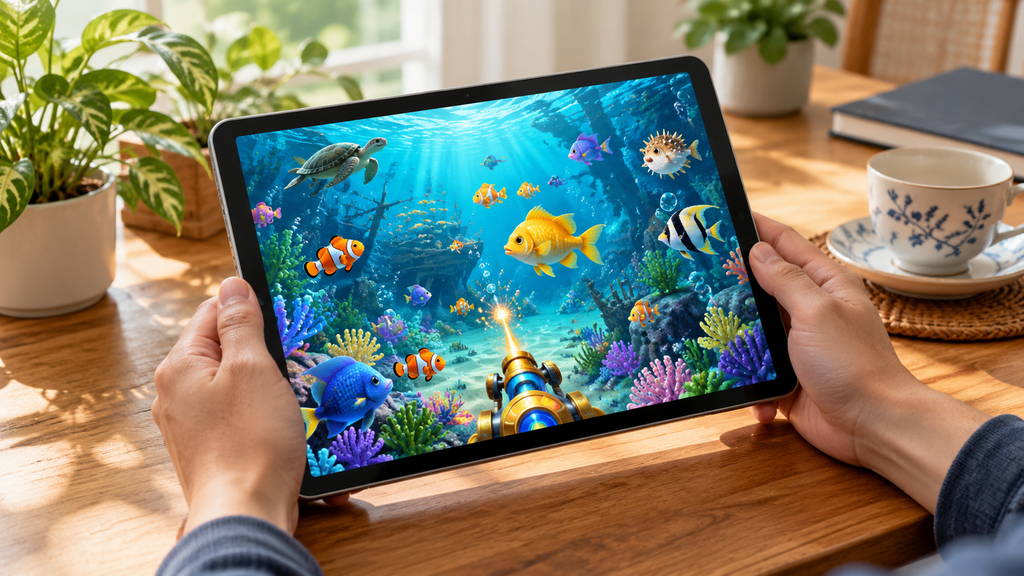
An underwater game screen can contain several fish types at once, each with different artwork, movement, and displayed rewards. Choosing a target begins with understanding those differences. For readers who reached this guide through okebet, the most useful starting point is the game’s reward table and help menu.
Target selection can make aiming more deliberate, but it should not be confused with a guaranteed way to improve returns. Visible fish behavior may help you follow a target while leaving the underlying capture outcome uncertain.

Separate Reward Size from Capture Probability
A fish with a high displayed reward may attract attention, especially when its animation fills much of the screen. However, the reward value alone does not tell you how much ammunition a capture will require or whether the next shot will succeed.
Read any published target mechanics. If the game does not disclose a probability or explain how a target is captured, avoid supplying one from appearance, movement, or a short sequence of results.
Compare Targets Using Clear Criteria
Instead of labeling a species as a guaranteed winner, compare what you can actually observe or verify. Consider whether the target is easy to distinguish, whether its reward is explained, and whether pursuing it fits your remaining spending limit.
When researching target advice with okebet, a comparison based on published rules is more dependable than a claim that a particular fish is always about to disappear.
| Target category | What to examine | What not to assume |
|---|---|---|
| Small fish | Visibility and displayed reward | Small targets always offer better value |
| Medium fish | Movement and any special rules | A moderate size implies a known capture chance |
| Large fish | Reward conditions and shot costs | A large payout outweighs every failed shot |
| Bonus creatures | Trigger requirements and feature details | A special animation guarantees a reward |
| Groups of fish | Whether shots can affect multiple targets | Every group supports area damage |
Choose Visibility over Screen Clutter
An overlapping fish group can be difficult to read. If several targets cover one another, it may be unclear where the aim is directed or which fish a shot affects. Wait until the screen is easier to follow, or use a target-lock feature if the game’s instructions explain one.
A cluster is useful only in ways the game actually supports. Do not assume that one bullet captures several fish or that a bouncing shot remains active unless the rules confirm those mechanics.
Avoid Spending More Because You Already Started
After firing several shots at one fish, it can feel wasteful to move on. But earlier spending does not prove that the next shot will succeed. The relevant question is whether continuing fits your original limit, not whether you want to recover the amount already spent.
Guides found through okebet should make this distinction clear. Persistence can consume credits even when the target remains visible, and a disappearing fish is not evidence that a reward is owed.
Frequently Asked Questions
Should beginners only aim at small fish?
There is no universal answer. Learn the controls and read the target rules rather than relying on size alone.
Does another player shooting a fish make it easier for me?
Only the game’s published shared-target mechanics can establish that. Do not assume shots from different players combine in your favor.
Build a Target Selection Habit
Check the reward, understand any special conditions, and keep the shot cost within your limit. For readers browsing okebet search results, this habit offers a clearer framework than chasing every large creature on the screen.